


Back



An Exclusive Interview with Ranova Founder Guo Fengqin Sixteen Years to Fill a Blank Space in China's Pet Food Industry
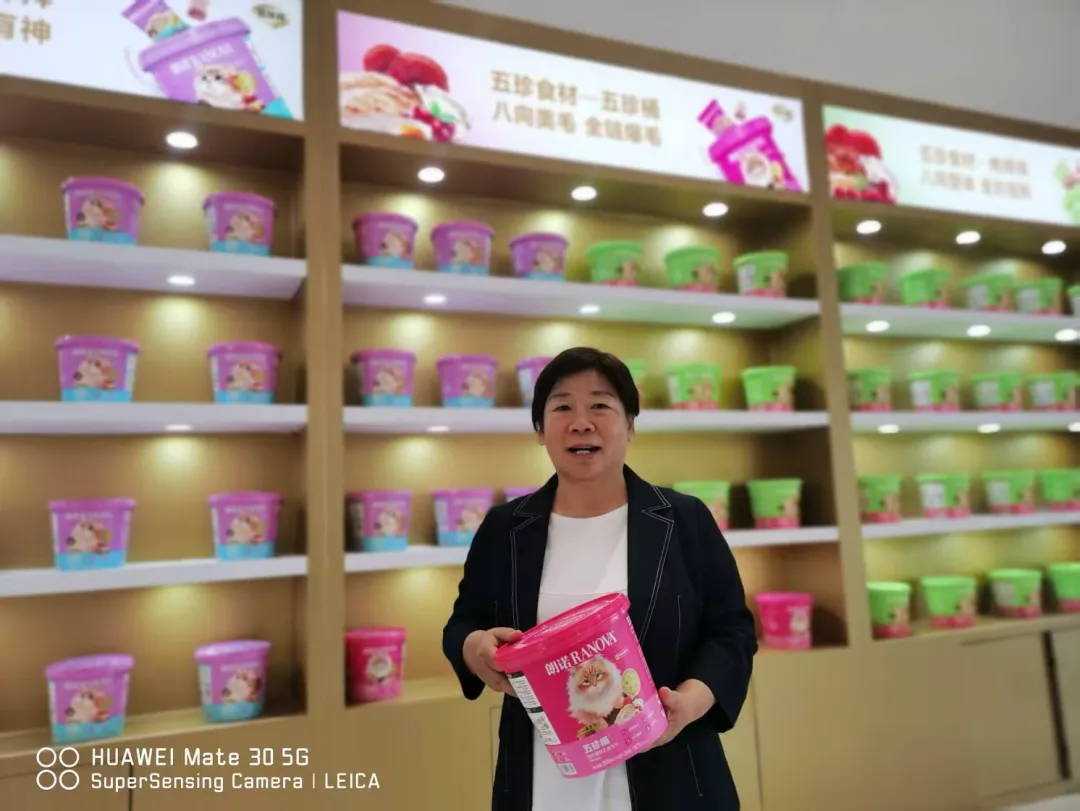
When freeze-dried pet food was still an almost nonexistent category in China, Guo Fengqin made an unconventional decision: She moved from the ornamental fish aquarium business into the pet food industry.
There were no specialized contract manufacturers, no industry standards, and virtually no consumer awareness. Rather than waiting for the market to evolve, she chose the harder path—developing the industry from scratch. She invested in a human-grade manufacturing facility, spearheaded China's first industry standard for freeze-dried pet food, and established an in-house cattery where more than 180 cats evaluate every new product before launch, at an annual cost of over RMB 700,000.
Today, Ranova has become one of China's most recognized names in freeze-dried pet nutrition. Yet Guo believes that the greatest lesson from sixteen years of entrepreneurship is that creating a new category is only the beginning.
"Filling a market gap is just the first step," she says. "The real challenge comes afterward—earning recognition for your standards, building trust in your brand, and ensuring that innovation keeps pace with evolving consumer needs."
From exporting as an OEM manufacturer to building its own consumer brand, from pioneering freeze-drying technology to advancing precision nutrition and personalized pet diets, Ranova's journey mirrors every major milestone in China's premium pet food market.
Recently, Guo sat down with the White Paper Editorial Team for an in-depth interview. Rather than telling a grand entrepreneurial success story, she reflected on the realities behind sixteen years of building a business—what it means to enter an unfamiliar industry, the true cost of craftsmanship, and the difficult choices between contract manufacturing and brand ownership.
"I Saw It in the U.S., but Not in China."
White Paper Editorial Team:
You originally worked in the ornamental fish industry. In 2009, you decided to enter the freeze-dried pet food market, when China's pet food sector was still dominated by extruded kibble and freeze-drying was virtually unheard of. What convinced you this opportunity was worth pursuing? Was there a defining moment that inspired your decision?
Guo Fengqin:
I wouldn't call it a sudden moment of inspiration. It was simply recognizing a very obvious gap.I saw that the United States already had a mature freeze-dried pet food market, while China had nothing comparable. My first thought was straightforward: if the product exists elsewhere and proves its value, why shouldn't China have it too?
Only after we entered the market did we realize what "a blank space" really meant.
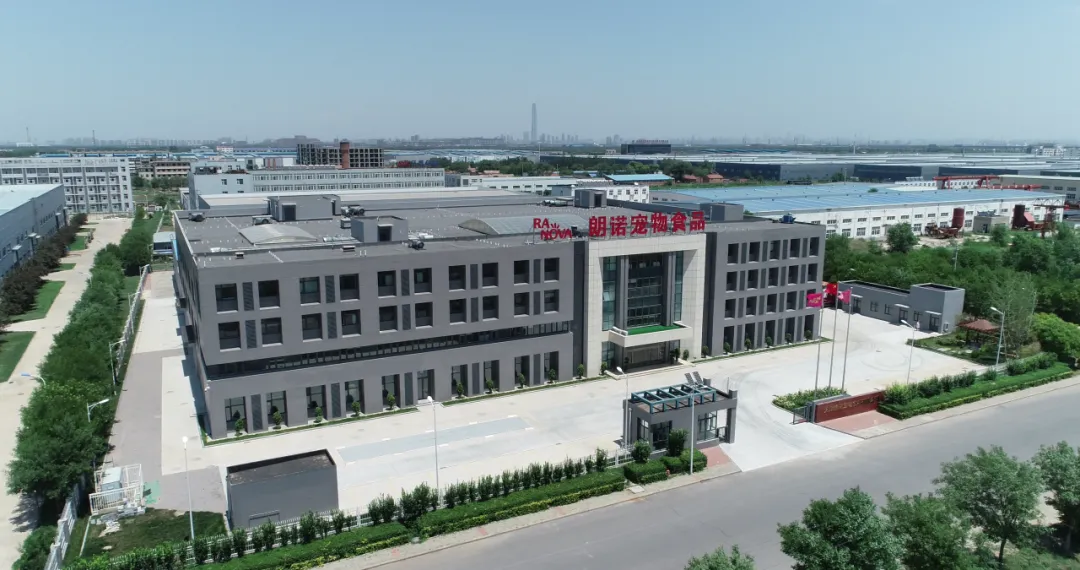
There were no specialized OEM manufacturers, no industry standards, and no consumer awareness. My husband, Dr. Liu Fengqi, and I made the decision together. His expertise was in freeze-drying technology for ornamental fish feed, and we believed the technology could be successfully adapted for pet food.
The first obstacle, however, appeared almost immediately. China simply didn't have professional manufacturers capable of producing freeze-dried pet food. The only option was to outsource production to factories certified for human food production. That meant significantly higher manufacturing costs, limited production capacity, and long scheduling delays.

White Paper Editorial Team:
What was the most difficult part during those early years? Did you ever think about giving up?
Guo Fengqin:
The hardest part wasn't any single technical challenge.
It was the fact that every time you solved one problem, another—and usually a bigger one—appeared.
You think finding a manufacturing partner will solve production, only to discover their production schedule leaves no room for your products.
You think once you've developed a product, customers will buy it. Instead, you realize consumers have never even heard of freeze-dried pet food.
Did I ever think about quitting?
Honestly, no.
I'm the kind of person who doesn't give up easily. Once I saw the gap, I felt compelled to fill it.
Looking back, I think many entrepreneurs entering a new industry see only an opportunity. What I saw was an entire ecosystem that had to be built from scratch, brick by brick.
That decision—to build the factory before building the market—probably determined from the very beginning that our journey would be slower, heavier, and far more challenging than most.
"The Cats Decide Whether a Product Is Good."
White Paper Editorial Team:
From the very beginning, Ranova built its production workshops to Class 100,000 cleanroom standards, a level that was highly unusual in China's pet food industry at the time. Did anyone on your team think you were being overly demanding? What made you stick to such high standards?
Guo Fengqin:
Absolutely. Many people thought I was taking things too far.
At that time, expectations for pet food manufacturing were much lower. Many believed that since the products were intended for pets rather than humans, there was no need to apply food-grade manufacturing standards.
My thinking was very simple:
If we wouldn't feel comfortable eating it ourselves, why should we feed it to our pets?
Another reason was practical. If you start with lower standards, upgrading later becomes incredibly expensive. Equipment has to be replaced, production processes redesigned, and the team's operating habits completely rebuilt.
It's far better to establish high standards from day one than to retrofit them later.
Looking back, I believe that decision was absolutely the right one.
Those standards became the foundation of our customers' trust and gave us the confidence to later lead the development of industry standards for freeze-dried pet food in China.
White Paper Editorial Team:
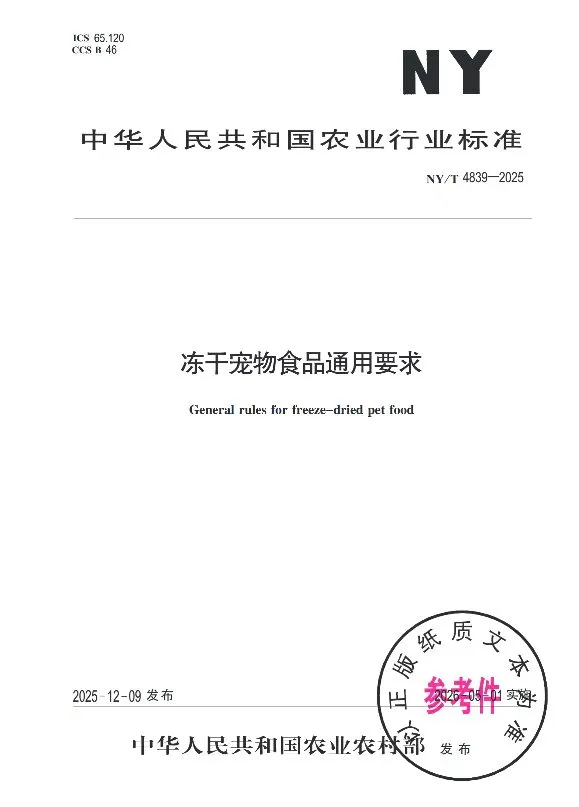
Speaking of standards, Ranova led the drafting of China's first Industry Group Standard for Freeze-Dried Pet Food, filling a major gap in the domestic market. Transitioning from simply making products to helping define industry standards is a significant milestone. How did that happen? Did anyone ever question whether Ranova was qualified to take on that role?
Guo Fengqin:
To be honest, the process was much smoother than I had expected.
We were among the earliest companies in China to specialize in freeze-dried pet food. We had entered the market first, accumulated the most experience, and established the largest production scale.
So when we proposed leading the standard-setting initiative, there was very little opposition.
Most people simply said,
"If Ranova doesn't do it, who will?"
But what makes me proud isn't the fact that we helped establish the standard.
What makes me proud is seeing freeze-dried pet food evolve from a niche concept into one of the most competitive categories—not only in China, but increasingly on the global stage.
Of course, this wasn't the achievement of one company alone. It reflects the collective efforts of the entire industry.
As one of the pioneers, however, we have a responsibility to keep moving forward. Innovation doesn't stop simply because you've reached a leadership position.
White Paper Editorial Team:
We've heard that Ranova even operates its own cattery with more than 180 cats, and every new product must pass their "quality inspection" before launch. Where did this idea come from? Have there ever been products that the cats rejected, requiring reformulation before they could be released?
Guo Fengqin:
The idea couldn't be simpler.Ultimately, the cats make the final decision.
No matter how convincing our marketing claims may sound, they mean nothing if the cats refuse to eat the product—or if it doesn't make them feel well.
Our in-house cattery costs us more than RMB 700,000 every year to operate and is home to over 180 cats.Before any new product reaches the market, it must pass two stages of evaluation.The first is testing within our own cattery.
The second is validation through a nationwide consumer testing program involving more than 1,000 pet cats living with their owners.Only after passing both stages can a product move into commercial production.In reality, roughly 70 percent of our new products fail the first round of internal testing.Most require two or even three rounds of reformulation before they finally meet our standards.For example,there was one product we genuinely believed was ready for launch.Nutritionally, the formulation looked excellent on paper.
But several cats in our cattery simply wouldn't eat it.Rather than assuming the cats were "wrong," we assumed the product still needed improvement.So we went back to work.We adjusted the proportions of the ingredients.We modified the kibble size.We fine-tuned the moisture level.Then we tested it again.And again.
In total, we reformulated that product four times before it finally passed.
Some people might see that as excessive.I see it differently.Every adjustment represents our responsibility to pet owners.After all, somewhere out there may be a cat that truly needs the nutritional benefits this product provides.
If poor palatability prevents that cat from eating it, then all of our nutritional science becomes meaningless.For us, product development isn't just about formulating better nutrition.It's about making sure pets are actually willing to enjoy it.
"OEM or Brand? You Have to Choose."
White Paper Editorial Team:
Ranova began as an OEM/ODM manufacturer, exporting freeze-dried pet products to more than 20 countries. At that stage, the contract manufacturing business was growing steadily, with stable orders and healthy profits. Why did you decide to shift your focus to building your own brand? Was there internal disagreement?
Guo Fengqin:
There was a great deal of disagreement.
Many people thought the OEM business was already successful. We had stable customers, predictable revenue, and healthy margins. From a business perspective, it seemed unnecessary to disrupt something that was working so well.
But I saw it differently.
In the long run, I don't believe a company can excel at both contract manufacturing and brand building simultaneously.
The two businesses compete for the same resources.
Manufacturing capacity.Quality control.Research and development.Talent.
Management attention.
When you're an OEM manufacturer, your first responsibility is to satisfy your customers' requirements.When you're building your own brand, your priority must be your own products and your own consumers.Trying to prioritize both at the same time often means neither receives the attention it deserves.
Eventually, you risk becoming average at both.
White Paper Editorial Team:
So you made the decision to choose one over the other?
Guo Fengqin:
Yes.
And it wasn't an easy decision.
We deliberately stepped back from part of our OEM business so that our best production capacity, quality control systems, and R&D resources could be dedicated to the Ranova brand.
Naturally, we lost some customers in the process.
There was short-term pain.
But I have never doubted the decision.
I've always believed that building our own brand offers a much broader future than remaining solely a contract manufacturer.
Our vision has never been simply to manufacture products for others.
Our ambition is to build a world-class pet food brand that represents Chinese innovation on the global stage.
White Paper Editorial Team:
What was the biggest challenge in transitioning from OEM manufacturing to operating your own consumer brand? How was it different from the challenges you faced in the early days of contract manufacturing?
Guo Fengqin:
They are completely different businesses.
When you're an OEM manufacturer, your customers are businesses.The language of that relationship is straightforward. Orders.Pricing.Specifications.Delivery schedules.Quality requirements.
As long as those expectations are met, the partnership works.
Building a consumer brand is entirely different.Now you're speaking directly to pet owners.The conversation is no longer about transactions.
It's about trust.It's about emotional connection.It's about helping people understand why your products deserve a place in their pets' lives.That's a very different kind of communication.
The second challenge was organizational.
An OEM company and a consumer brand require completely different capabilities.
An OEM business focuses on operational efficiency, cost control, production planning, and on-time delivery.A consumer brand requires customer insight, storytelling, product positioning, marketing, and channel development.
Building both sets of capabilities took us many years.They're not interchangeable.
They're two entirely different operating systems.
White Paper Editorial Team:
Looking back now, do you feel that transformation has paid off?
Guo Fengqin:
Absolutely.
Today, Ranova has served more than 3.5 million consumers across China.
We've built a complete connection between product development, manufacturing, branding, retail channels, and end consumers.That foundation gives us confidence for the next stage of growth.Our focus now is no longer simply building the system.
It's scaling it.
"Some Products Take Five Years Before They Become Profitable."
White Paper Editorial Team:
Ranova invests more than RMB 7 million in research and development each year. The company collaborates with leading universities, including Nankai University and Tianjin University of Traditional Chinese Medicine, and has invited Academician Li Defa of the Chinese Academy of Engineering to serve as an advisor. That's a significant long-term investment. How do you balance R&D spending with short-term profitability?
Guo Fengqin:
It's a very practical question.
The reality is that new products rarely make money in their early years.
Before a product reaches profitability, you've already invested heavily in research, raw materials, manufacturing trials, testing, and market education.
In most cases, it takes two or three years before you begin to see a return.
Some products take even longer.
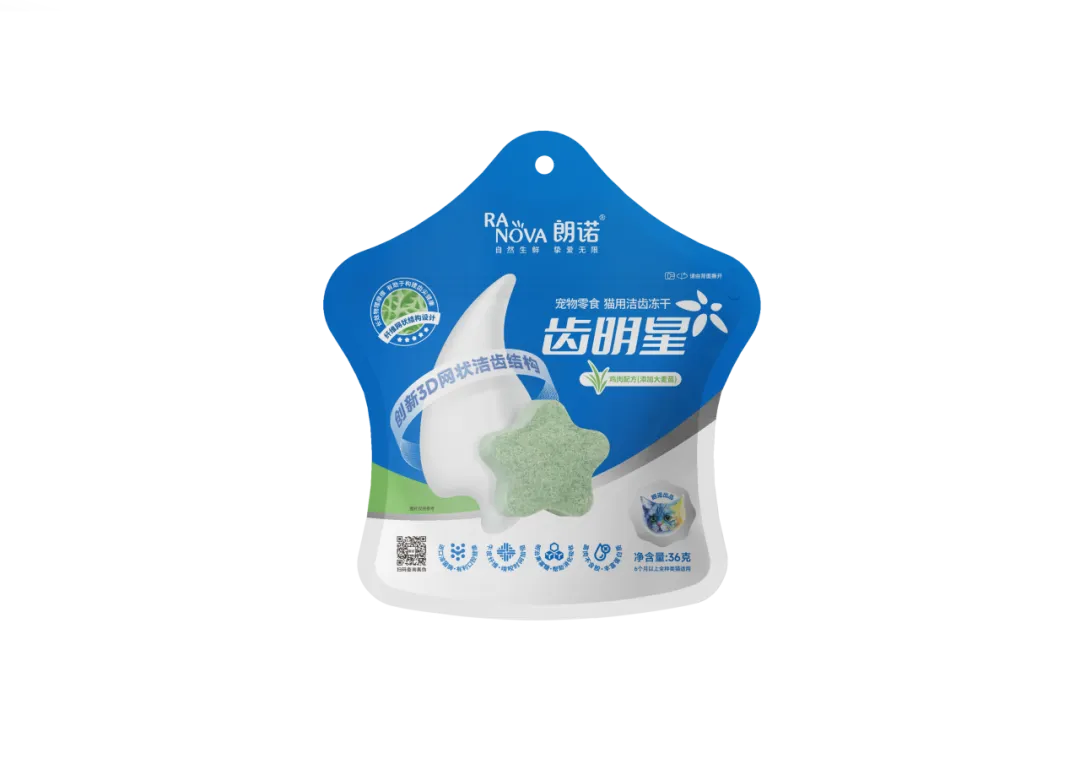
Take our dental care product, Dental Star, for example.
We've been developing it for nearly five years, and it still hasn't become profitable.
So why continue investing?Because truly innovative products require time for the market to catch up.Consumers need to understand why oral care matters for cats.
They need to understand why this technology is different.And that kind of understanding doesn't happen overnight.
We are willing to wait.
Ironically, when competitors introduce similar products, it sometimes helps us.
Their products contribute to educating the market alongside ours.
I'm not afraid of competition.
What concerns me far more is a market that never learns to recognize the value of an entirely new category.
 White Paper Editorial Team:
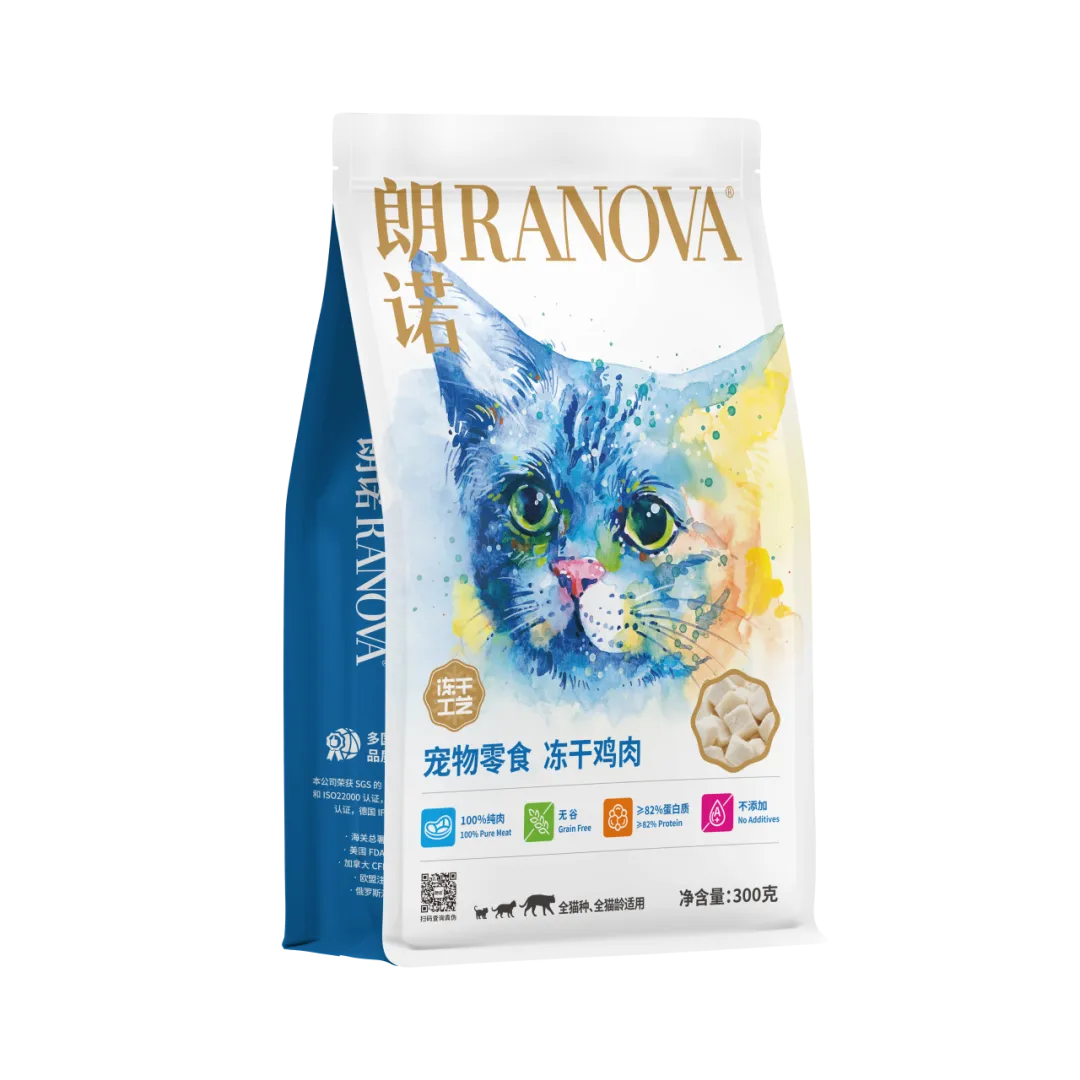
You've previously described the evolution of freeze-dried pet food as progressing through five generations of technology, with Ranova now moving toward the fifth generation—precision nutrition and personalized formulations.
How did this idea emerge? Was there a particular experience that inspired it?
Guo Fengqin:
It came from observing our own cats.
Our in-house cattery is home to more than 180 cats, and every one of them is different.
Some are overweight.Some have sensitive digestive systems.
Some struggle with separation anxiety.Some are elderly and require diets with lower phosphorus levels.
For years, we fed every cat essentially the same food.
But over time, it became obvious that what works well for one cat isn't necessarily the best choice for another.That realization changed the way I think about pet nutrition.
In the future, pet food shouldn't be one-size-fits-all.
People already have personalized nutrition.
There are meals designed for weight management, muscle building, pregnancy, diabetes, and countless other health needs.
Why shouldn't pets benefit from the same level of nutritional precision?
That's exactly what we hope the fifth generation of freeze-dried technology will achieve.
Instead of simply selling a bag of pet food, we want to recommend the most appropriate formula based on each pet's breed, age, body condition, lifestyle, and health profile.
For us, the future isn't about selling more products.
It's about delivering the right nutrition to the right pet.
White Paper Editorial Team:
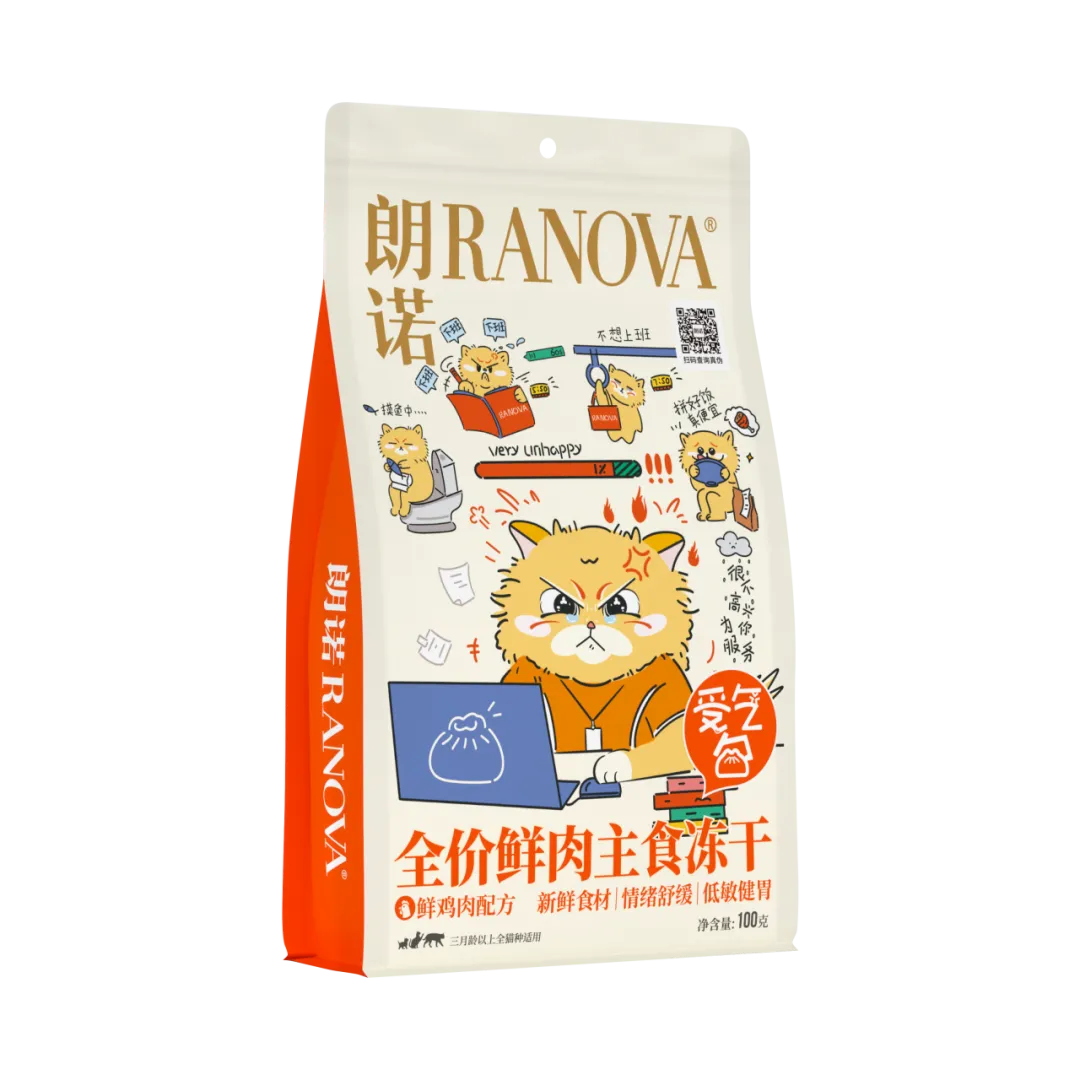
Ranova recently introduced a freeze-dried staple food called "Shouqibao" (literally, No More Taking the Blame), designed to support emotional well-being. The product contains ingredients such as ginseng and astragalus root, and is positioned as helping pets remain calm and emotionally balanced.
How did you identify this market need?
Guo Fengqin:
The idea came from two observations.
The first was society itself.Today, people place much greater value on emotional well-being than ever before.Especially among younger generations, emotional health has become an important part of everyday life.The second came from pets.
Many companion animals experience separation anxiety.
Owners leave for work, and the pets become anxious.
They bark excessively.They damage furniture.They become stressed.
We began asking ourselves a simple question:
Could nutrition help improve emotional well-being for both pets and their owners?
If a pet feels calmer, it behaves more confidently and comfortably at home.
And when owners see their pets thriving, they naturally experience greater peace of mind as well.It's a positive emotional cycle.
We're not trying to create a medicine.
We're creating functional nutrition that supports emotional wellness as part of everyday life.
For us, the goal isn't treatment.
It's long-term care.
White Paper Editorial Team:
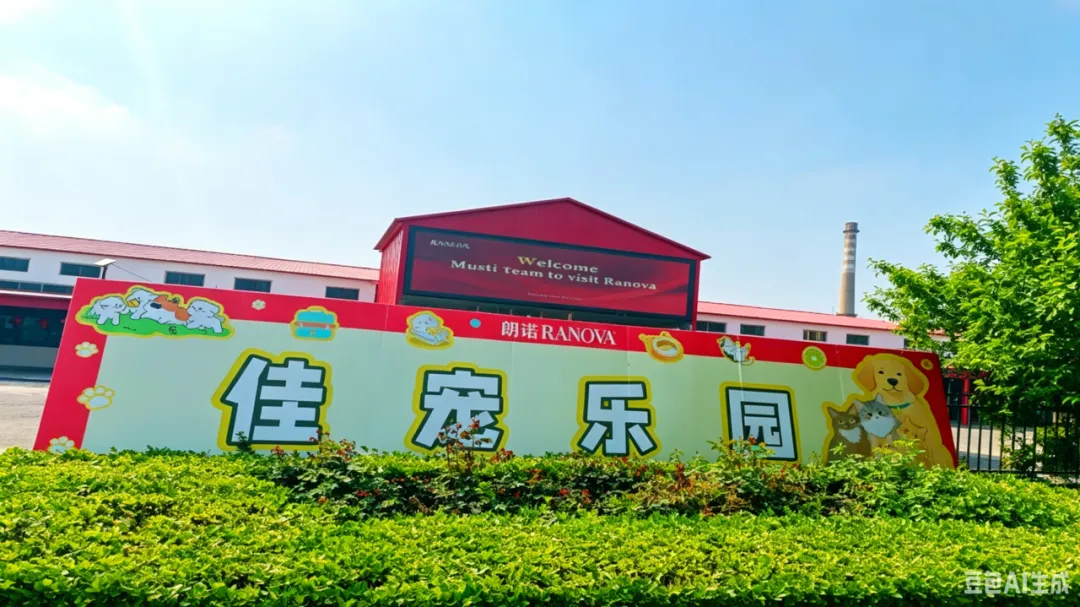
Ranova is also building a pet park, scheduled to open next year. Moving from manufacturing products to creating physical experiences seems like a significant expansion. Some people might say it's unrelated to your core business.
How do you respond?
Guo Fengqin:
I've heard that question many times.
My answer is always the same.
This isn't a distraction from our business.
It's an extension of it.
The pet park isn't intended to be simply another entertainment venue for pet owners.
It's designed to function as a real-world innovation and testing platform.
It allows us to observe how pets interact with new products in natural settings, collect valuable feedback from owners, and evaluate new ideas before bringing them to market.
In other words, the park exists to serve our R&D and our brand—not the other way around.
Innovation doesn't happen only in laboratories.
Sometimes the most valuable insights come from watching pets and people simply spend time together.
Transition
Throughout the conversation, one theme continued to surface:
Patience.
Whether it's investing five years in a product that has yet to generate a profit, operating an in-house cattery, or building an entirely new testing environment, Ranova has repeatedly chosen long-term value over short-term returns.
That philosophy has also shaped Guo's perspective as a female entrepreneur—one who believes that while empathy may be an advantage, success ultimately depends on execution.
"The Market Won't Go Easy on You Just Because You're a Woman."
White Paper Editorial Team:
The pet food industry is highly technology-driven. As a female entrepreneur, do you think there are any strengths that women bring to the business which are often underestimated?
Guo Fengqin:
I do believe women often have a natural advantage when it comes to understanding emotions and human relationships. The majority of our consumers are women.Women tend to understand other women more intuitively.
They understand why pet owners worry.Why they are willing to invest in their pets' well-being.What kind of experience makes them feel emotionally connected to a brand.That ability to empathize is valuable in both product development and brand communication.
At the same time, however, the market doesn't give you special treatment because you're a woman.
If a new production line needs to be built, you build it.
If R&D requires investment, you invest.If difficult decisions have to be made, you make them.The pressure doesn't become any lighter.In business, gender is neither an advantage nor a disadvantage.What ultimately matters is whether you can deliver results.
White Paper Editorial Team:
What advice would you give to women who are starting businesses in the pet industry today?
Guo Fengqin:
Do what you truly believe in.And keep doing it.Every era demands different capabilities.Years ago, manufacturing excellence determined success.
Today, communication and brand building matter just as much.Tomorrow, perhaps the most important quality will be conviction—the willingness to pursue a meaningful vision despite uncertainty.Whatever the era requires, the starting point remains the same:Know what you want to achieve.Then stay committed to it.
White Paper Editorial Team:
One final question.
If you had to summarize Ranova's sixteen-year journey in a single sentence, what would it be?
Guo Fengqin:
(She pauses for a moment.)That's a difficult question.
Sixteen years is a long time.It's impossible to capture everything in just one sentence.But if I had to answer today, I would say this:
"We've simply kept choosing to do the difficult—but right—things."
Editor's Note:
One phrase surfaced repeatedly throughout our conversation with Guo Fengqin:
Persistence.
It appeared in every chapter of Ranova's story.
Building a human-grade manufacturing facility before the market even existed.
Operating an in-house cattery where every product must earn approval from the cats themselves.Walking away from profitable OEM business to invest in a consumer brand.Continuing to support products that have yet to generate profits after years of research.None of these decisions optimized for short-term efficiency.
All of them reflected a commitment to long-term value.
That may seem counterintuitive in today's business environment.But the pet industry has always been different.Trust cannot be manufactured overnight.
Standards cannot be established through marketing alone.
And no laboratory can replace the honest opinion of a cat deciding whether—or not—to take another bite.
In many ways, Ranova's sixteen-year journey is the story of what some might call a "slow company."Not slow in ambition.But deliberate in execution.
When asked to summarize those sixteen years in a single sentence, Guo hesitated.
Perhaps the answer isn't found in one sentence at all.Perhaps it's found in the 180 cats that evaluate every product.
In the innovations that required five years before reaching the market.And in the countless small decisions that helped transform freeze-dried pet food from an unfamiliar concept into one of China's fastest-growing premium pet food categories.
Sometimes, building an industry doesn't happen through one breakthrough.
It happens through thousands of quiet decisions made consistently over time.
Closing
From creating China's first generation of freeze-dried pet food to exploring the future of precision nutrition, Ranova's story has never been about following industry trends.
It has been about creating them.
And after sixteen years, Guo Fengqin still believes the company's greatest achievements lie ahead.
Latest News